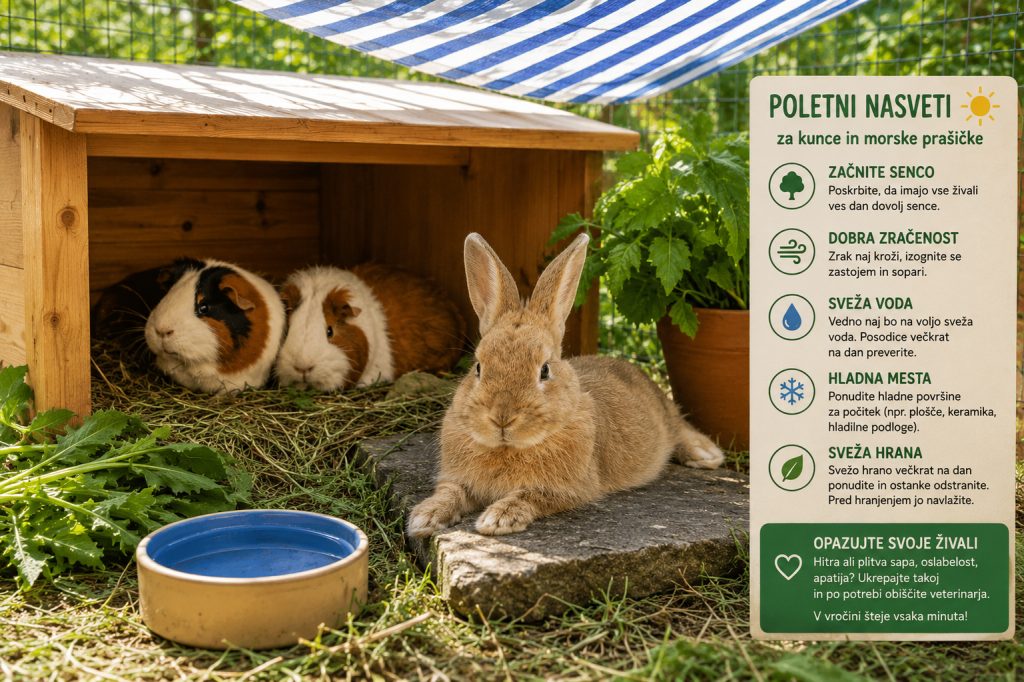
Summer, sunshine and warm days – while they often bring us joy, they can quickly become a serious burden for small animals. Rabbits and guinea pigs in particular are very sensitive to high temperatures. They tolerate heat much less well than humans, which is why they need our help and protection during the summer months.
In this article, you will learn how to protect your small animals from summer heat, how to recognize the signs of heat stress, which measures really help, and when it is better to move your animals indoors.
In brief: How can you protect small animals from summer heat?
Small animals such as rabbits and guinea pigs need plenty of shade, fresh water, good air circulation, cool places to retreat to, and an appropriately adjusted diet on hot days. Direct sunlight, stuffy enclosures, enclosed houses without ventilation, and overheated indoor spaces should be avoided.
When temperatures are very high, or when an outdoor enclosure cannot remain sufficiently cool throughout the day, it is best to move the animals to a cooler and safe location.
Why is summer heat dangerous for rabbits and guinea pigs?
Rabbits and guinea pigs are not animals that cope well with high temperatures. They cannot sweat like humans do and have only limited ways of regulating their body temperature.
Even a normally warm summer day can be exhausting for them – especially if their enclosure is exposed to sunlight, there is little air circulation, or they do not have a cool place where they can retreat.
Particularly vulnerable are:
- older animals,
- very young animals,
- sick or weakened animals,
- overweight animals,
- long-haired rabbits and guinea pigs,
- pregnant animals,
- animals kept in outdoor enclosures without sufficient shade.
Important
We often underestimate the effects of heat. A spot that is pleasantly shaded in the morning may already be exposed to strong sunlight by midday. That is why, during the summer, you should check the enclosure several times a day and make sure that your animals always have access to shade and a cooler place where they can retreat.
When Does Heat Become Dangerous for Small Animals?
There is no single temperature at which heat becomes dangerous for all animals. The animal’s overall health, humidity, amount of shade, air circulation, and the design of the enclosure all play an important role.
As a general guideline, at temperatures around 25°C, it is advisable to pay particular attention and start taking measures to keep your animals cool. Temperatures around 30°C or higher can quickly become dangerous for rabbits and guinea pigs, especially if they do not have enough shade, good air circulation, and cool places to retreat to.
Therefore, do not monitor the thermometer alone – also pay attention to your animals’ behaviour and the actual temperature inside the enclosure. The temperature inside an enclosure can be considerably higher than the officially measured outdoor temperature.
How to Recognize Heat Stress in Rabbits and Guinea Pigs
Small animals often show signs that they are unwell only at a late stage. That is why it is especially important to observe them closely during hot summer weather.
Possible signs of heat stress include:
- rapid or shallow breathing,
- lethargy and reduced responsiveness,
- restlessness or suddenly withdrawing,
- warm or very red ears in rabbits,
- drooling or wet fur around the mouth and nose,
- staggering or unsteady movement,
- refusing food,
- seizures or severe weakness.
If your animal is very lethargic, is breathing shallowly, is lying…na boku ali se ne odziva več normalno, gre lahko za nujno stanje. V takem primeru čim prej poiščite veterinarsko pomoč.
How to Protect Small Animals from Summer Heat: The Most Important Tips
1. Always Provide Enough Shade
Shade is the most important form of protection during the summer. A small shaded corner is often not enough. All animals should have enough space to comfortably retreat into the shade at the same time.
With outdoor enclosures, pay particular attention to the movement of the sun throughout the day. An area that is shaded in the morning may be fully exposed to the sun in the afternoon and become extremely hot.
Suitable options for providing shade include:
- natural shade from trees or shrubs,
- shade sails,
- well-ventilated roofs or shelters,
- light-coloured fabrics placed above the enclosure, with enough distance to allow air to circulate,
- shaded areas with a cool surface.
2. Ensure Good Air Circulation
Heat becomes particularly dangerous when the air cannot circulate properly. This applies both to animals kept indoors and to those housed in outdoor enclosures.
If your animals are kept indoors, it is advisable to ventilate the room early in the morning and in the evening. During the day, prevent direct sunlight from entering by using curtains, blinds, or shutters. A fan can help circulate the air in the room, but it should never blow directly onto the animals.
For outdoor housing, the enclosure should be placed in a well-ventilated location rather than in a stuffy corner with little or no airflow.
3. Check Fresh Water Several Times a Day
On hot days, small animals must have constant access to fresh drinking water. Check their water bowls several times a day and refill them with fresh water whenever necessary.
It is also important where the water bowl is placed. It should never be left in direct sunlight, as water in a heated bowl can warm up quickly and become less appealing for the animals to drink.
4. Create Cool Places to Rest
Many rabbits and guinea pigs like to lie on cool surfaces on hot days, as these can help them cool their bodies.
Suitable options include:
- stone slabs,
- ceramic or floor tiles,
- ceramic cooling tiles,
- cool, shaded areas on the ground,
- cooling mats or cooling pads, provided they are safe to use and made from materials that the animals cannot easily chew through.
Important: Never place ice packs or frozen water bottles directly and unprotected inside the enclosure. If you use them, always wrap them securely in a towel or another piece of fabric and make sure the animals cannot chew on them.
5. Keep Fresh Food Fresh and Remove Leftovers Regularly
During the summer, many owners offer their rabbits and guinea pigs more fresh food and meadow plants. This is perfectly understandable, but such food needs to be monitored carefully.
At high temperatures, fresh food spoils more quickly. Remove wilted, softened, or rotting leftovers from the enclosure regularly. This helps prevent unpleasant odours, attracting flies, and potential digestive problems.
It is better to offer fresh food several times a day in smaller portions and monitor how much the animals actually eat.
Tip: Lightly rinse or moisten fresh food before feeding. This way, the animals will also take in some additional fluid along with their food.
Outdoor Housing in Summer: Avoid These Mistakes
When keeping animals outdoors, many people first think of fresh air and a natural environment. However, outdoor enclosures can become dangerously hot very quickly during the summer.
Be sure to avoid:
- enclosures exposed to direct sunlight,
- shaded areas that are too small to provide enough shade for all the animals,
- enclosed houses as the only place for the animals to retreat to,
- plastic covers without adequate air circulation,
- dark tarps placed directly over the enclosure,
- water bowls left in direct sunlight,
- heavily heated stone or concrete surfaces without access to a cooler place.
On hot days, check the enclosure several times throughout the day. The most critical time is around midday and in the early afternoon.
When Should Rabbits and Guinea Pigs Be Moved Indoors During Summer?
Not every outdoor enclosure remains cool enough during the summer. Therefore, do not rely solely on the weather forecast – also check the actual temperature inside the enclosure.
As a general guideline, when temperatures reach around 25°C, animals should be monitored carefully and provided with additional cooling. If the enclosure becomes too hot despite shade, good air circulation, and cooling options, it is advisable to move rabbits and guinea pigs to a cooler location.
At temperatures of around 30°C or higher, you should carefully consider whether the animals can safely remain outdoors at all. If the enclosure is not shaded throughout the entire day, well ventilated, and noticeably cooler than the surrounding environment, a cool indoor space is often the safer choice.
Animals Should Be Moved Indoors Especially When:
- the enclosure is exposed to direct sunlight around midday or in the afternoon,
- the shaded area is not large enough for all the animals,
- there is little or no air circulation and the enclosure becomes very hot,
- the air is humid and there is no way for the animals to cool down,
- the animals are older, sick, weakened, overweight, or long-haired,
- rabbits or guinea pigs are breathing more rapidly, appear lethargic, or are unusually quiet.
Important: Not every indoor space is automatically cooler. Attic apartments, conservatories, or rooms that become very hot can be just as dangerous as an outdoor enclosure. Therefore, choose a genuinely cool and quiet space, such as a shaded room, a pleasantly cool basement area, or another safe location.
Also avoid large temperature differences. Do not move an animal directly from extreme heat into an ice-cold room. It is better to choose a comfortably cool, but not excessively cold, space where the animals can gradually cool down and settle.
If you have several animals living together, move them all at the same time whenever possible. This will help prevent additional stress caused by separation.
If you are unsure, it is better to take action a little earlier rather than too late. In rabbits and guinea pigs, heat stress can very quickly become life-threatening.
Indoor Housing During Summer Heat: What You Need to Pay Attention To
Even indoors, small animals can quickly become too hot. Attic apartments, conservatories, rooms with large glass surfaces, and poorly ventilated rooms are particularly dangerous.
The following measures can help:
- ventilate the room early in the morning and in the evening,
- keep the room shaded during the day,
- prevent direct sunlight from entering,
- do not place the enclosure directly next to a window,
- regularly monitor the room temperature,
- provide the animals with cool surfaces to rest on,
- make sure that drafts do not blow directly onto the animals.
If the room becomes very hot, it is advisable to temporarily move the animals to a cooler room. It is important that the new location is genuinely comfortably cool and that the animals can be housed there safely.
What to Do If You Suspect Heatstroke?
Heatstroke is an emergency. If your rabbit or guinea pig is extremely weak, is breathing rapidly or shallowly, is no longer responsive, or is lying stretched out on its side, seek veterinary help immediately.
Until you reach the veterinarian:
- move the animal out of the heat as quickly as possible,
- place it in a cool and quiet room,
- gently cool the ears and feet with lukewarm to slightly cool water,
- never cool the animal with ice-cold water,
- offer fresh water, but do not force the animal to drink,
- keep the journey to the veterinarian as cool, calm, and stress-free as possible.
Important: Do not wait for the condition to improve on its own. In cases of heatstroke, taking action quickly can be critical to saving the animal’s life.
Summer Checklist for Rabbits and Guinea Pigs
On warm summer days, check the following:
- Is the enclosure in the shade throughout the entire day?
- Do all the animals have enough space in the shade at the same time?
- Is there good air circulation?
- Do the animals have constant access to fresh water?
- Are the water bowls clean and cool?
- Do they have cool places to rest?
- Is the outdoor enclosure actually cooler than the house or apartment?
- Would it be better to temporarily move the animals indoors because of the heat?
- Can fresh food be regularly replaced throughout the day?
- Are the animals behaving normally?
- Are they breathing calmly?
- Are they eating as usual?
If you cannot reliably answer yes to several of these questions, it is time to improve the conditions for your animals.
Conclusion: Get Through the Summer Safely with Care, Shade and Good Husbandry
Summer heat can quickly become dangerous for small animals such as rabbits and guinea pigs. Providing enough shade, fresh water, good air circulation, cool places to rest, and an appropriate diet can make hot days much more comfortable for them.
Timely action is also important. If the outdoor enclosure becomes too hot despite having shade, or if your animals show the first signs of heat stress, move them to a cooler and safe location as soon as possible.
Even during the summer, good-quality hay remains the most important part of their diet. It should always be available, smell pleasantly fresh, and be stored in a dry place. On hot days, it is especially important to regularly check their food, the conditions inside the enclosure, and the animals’ wellbeing.
This way, your rabbits and guinea pigs can get through the hot summer days as calmly, safely, and comfortably as possible.